Drying quality depends not only on the equipment itself but also on the setting and execution of process parameters. This article focuses on the process factors and technological advancements that influence the final quality of veneer.
Formulation and Execution of the Drying Process Curve
Veneer drying is not simply "fast drying at high temperatures" but rather a dynamic, multi-stage precision process.
- Preheating Stage: High-moisture wet veneer entering the dryer first requires a rapid warm-up preheating period. The goal of this stage is to quickly raise the overall temperature of the veneer, preparing it for the massive evaporation of moisture.
- Constant Rate Drying Stage: This is the stage of most intense moisture evaporation. The veneer surface is covered with free water, and the evaporation rate is constant. This phase requires relatively high temperatures, high air volume, and maximum exhaust to maintain a strong driving force for evaporation.
- Falling Rate Drying Stage: Once the veneer moisture content falls below the fiber saturation point, moisture evaporation moves from the surface to the interior, and the evaporation rate begins to decline. At this point, it is necessary to appropriately reduce the temperature and decrease exhaust to prevent the veneer from becoming overdried, brittle, or cracked, ensuring it retains good plasticity.
An excellent control system can automatically execute this coordinated "Temperature-Speed-Exhaust" process curve based on the veneer species, initial moisture content, and thickness.
Technological Innovations Enhancing Overall Performance
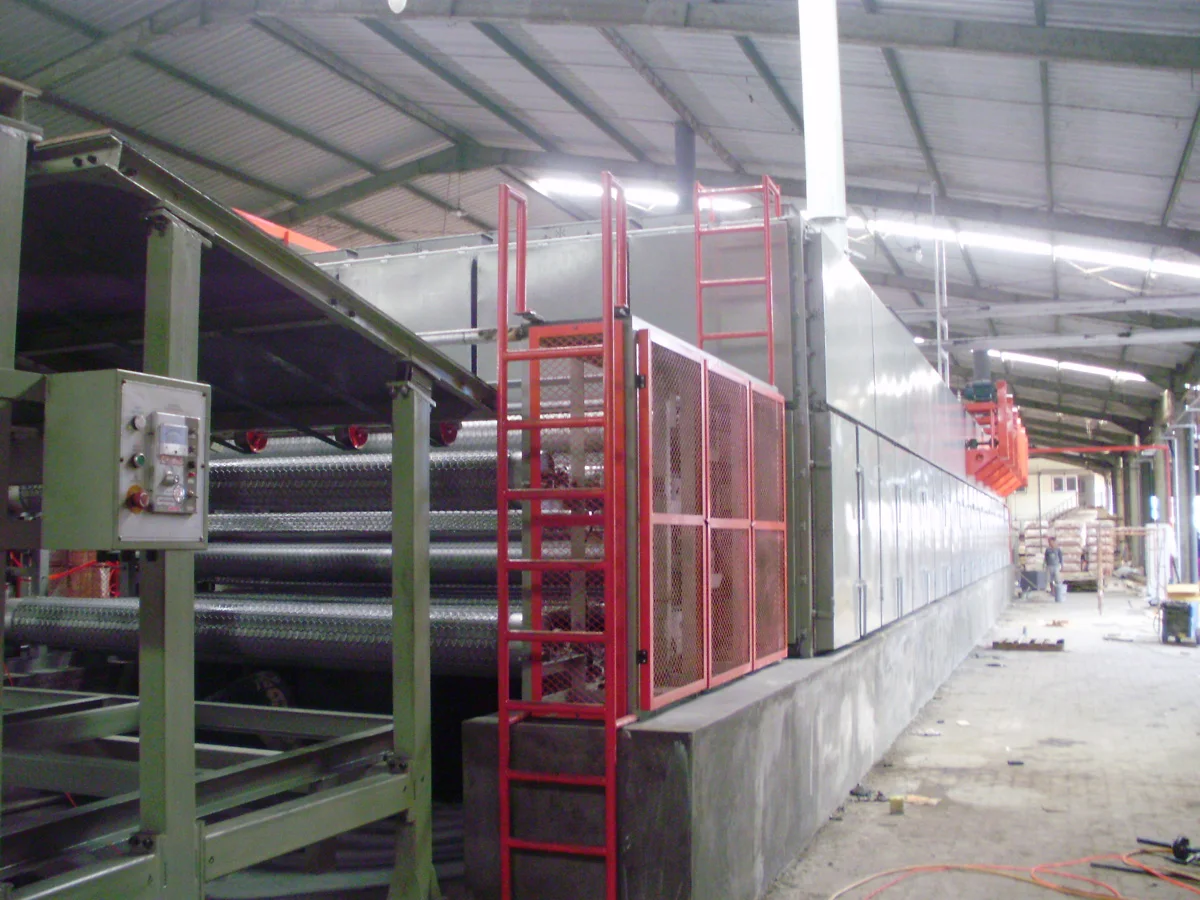
- Zoning Control Technology: Modern high-end dryers divide the drying chamber into multiple independently controlled zones (e.g., heating zone, balanced drying zone, conditioning zone) along its length. Each zone can have independently set temperature, air velocity, and exhaust parameters, allowing the veneer to undergo the most rational process path, effectively addressing uneven drying between the ends and middle of the veneer sheets, and between the surface and core layers.
- Online Humidity Monitoring and Feedback Control: Installing online humidity sensors at key points inside the dryer allows for real-time monitoring of the humidity of the drying medium (air). The control system dynamically adjusts the exhaust damper opening based on this feedback signal, achieving demand-based exhaust and maximizing energy savings while ensuring drying quality.
- Roller Design and Material Upgrades: Using thinner-walled, alloy materials with better thermal conductivity for the rollers reduces thermal resistance and improves heat transfer efficiency. Special treatments of the roller surface (such as precision grinding, Teflon coating) reduce veneer sticking, which is particularly effective for species like poplar that have high sugar content and are prone to sticking to the rollers.