

Plywood Machine
-
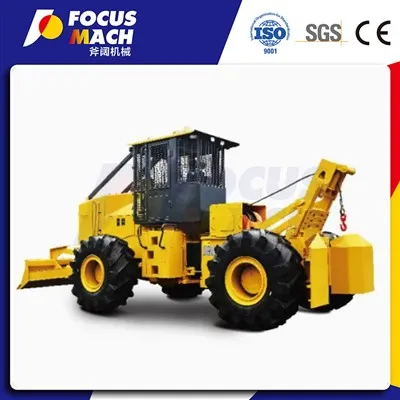 240HP Forest Log Skidder MachineThis 240HP forest log skidder features a hydraulic winch with 204 KN line pull, four-forward and four-reverse gears, and 23.5-25 herringbone tires. Front axle swings ±12° for rough terrain. Built forAdd to Inquiry
 -
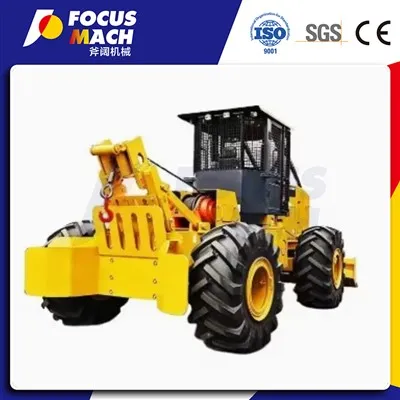 Wood Skidder 19ton Wheel Forestry Log SkidderThis 19-ton wheel forestry skidder is built for log collection in primitive forests. Features a reinforced integral cab, limited slip rear axle, and hydraulic winch with 204–250 kN line pull. PoweredAdd to Inquiry
 -
 15t 20t 23t Front End Wheel Loader With Log Grapple / Tim...This front end wheel loader series ranges from 5t to 8t rated load with operating weights from 16,200 kg to 28,500 kg. Equipped with a log grapple for timber handling. Powered by Weichai enginesAdd to Inquiry
 -
 Wood Handling Loader – Log Grapple Loader 5t, 8t, 10t, 12...This wood handling loader series ranges from 5t to 15t rated load, with operating weights from 16,500 kg to 25,000 kg. Powered by Weichai or Cummins engines (162–199 kW), these log grapple loadersAdd to Inquiry
 -
 5-ton Wheel Loader With Log Grapple For Wood Handling / T...This 5-ton wheel loader is equipped with a hydraulic log grapple for timber handling and wood yard loading. The grapple has a 1,000 mm clamping diameter, suitable for grabbing single logs or smallAdd to Inquiry
 -
 3.0 – 3.8 Ton Diesel Forklift (CPC30 / CPC35 / CPC38)This series of diesel counterbalanced forklifts includes three models rated at 3,000 kg, 3,500 kg, and 3,800 kg lifting capacity. Designed for warehouses, logistics centers, construction sites, andAdd to Inquiry
 -
 3 Ton Wheeled Skidder / Log Skidding Machine For ForestryThis 3-ton wheeled skidder is purpose-built for forestry operations including log skidding, timber collection, and land clearing. Designed to drag logs from felling sites to landing areas, itAdd to Inquiry
 -
 3 Ton Log Grabber / Forestry Crane With GrabThis 3-ton wheeled log grabber is designed for timber loading, log sorting, wood yard handling, and biomass feeding. Built on a heavy-duty chassis rated at 8,000 kg machine load capacity, it combinesAdd to Inquiry
 -
 Automatic 4X8 Feet Wood Core Veneer Stacking Stacker MachineThe veneer peeling line not only improves the quality and precision of veneer production, but also greatly improves the production efficiency and the degree of automation of the whole machine. . TheAdd to Inquiry
 -
 CNC Automatic Plywood Edge Sawing MachinePlywood edge trimming saw / DD saw/ Edge cutting saw is the necessary and one of the most imortant machine during the plywood production process, it cutting the rough said to the regular side, to theAdd to Inquiry
 -
 Plywood Wood Panel 4 Four Side Trimming Cutting Edge Saw1.Plywood edge cutting saw or double sizer, its function is cutting four edges of plywood, make plywood edge tidiness and smoothly.. 2.In general, the standard plywood cutting size is 4*8feet, ifAdd to Inquiry
 -
 4 Four Side Grinding Trimming Saw Plywood Cutting Edges S...This fully automatic panel edge trimming saw delivers high-precision cutting and stacking for plywood, particleboard, and more. With infrared positioning and PLC control, it ensures accuracy withinAdd to Inquiry


The plywood machine refers to a man-made board that is rotated by a veneer peeling machine into a veneer, and then glued perpendicular to each other along the fiber direction and pressed the veneer. Plywood is an ideal product for a wide range of applications such as building templates, interior decoration, various furniture, office supplies, combined speakers, packaging and exhibition layouts. Plywood is made of three or more veneer layers and is glued together with an adhesive. Generally, the texture of each layer of wood or ply should be at right angles to the adjacent layer to reduce shrinkage and increase the strength of the finished part. Most plywood is pressed into large panels for construction. Other plywood parts can be shaped into simple curves or compound curves for use in furniture, boats and airplanes. Plywood machines are essential equipment in the production of plywood.
Advantages of Plywood Machine
Fully Automated: They are fully automated, with computerized control systems that ensure consistent and precise production. Automation eliminates the need for manual intervention, minimizing the risk of errors and improving production speed.
High Speed: They can produce a large number of plywood sheets within a short span of time, improving productivity and profitability.
Precision Cutting: It is equipped with high-precision cutting blades that ensure accurate and clean cuts on each plywood sheet.
Quality Control: Advanced sensors and inspection mechanisms are integrated within the machine to detect any defects or irregularities in the plywood sheets. This helps to maintain the quality of the plywood sheets and minimize wastage.
Easy Maintenance: It is designed to be easy to maintain, with minimal servicing required. This reduces downtime and increases productivity.
Why Choose US
Our Product
Veneer Peeling Machine, Veneer Dryer Machine, Glue Spreader Machine, Cold Press Machine, Hot Press Machine, Edge Sawing Machine, Sanding Machine, Particleboard OSB Line, MDF HDF Line, Short Cycle Lamination, Hot Press Boiler Lifter Table, Plywood Paving Line, Overturner Machine, Core Composer Machine, Putty Spreader Machine, Glue Mixer Machine
Product Application
Furniture manufacturing, House decoration, Construction engineering, Packing, Flooring, Container manufacturing, Shipbulding, Trains manufacturing etc.
Our Certificate
BV, COC, Trademark, Member of Linyi Exhibition Association, Member of Linyi Import & Export Association, Member of Linyi E-commerce Industry Promition Association
Production Equipment
More than 80 types of machining equipment, including ordinary lathes, milling machines, planers, grinders, drilling machines, etc., including more than 20 CNC machine tools, have advanced and complete machining capabilities.
Production Market
North America countries, Middle America countries, South America countries, Southeast Asian countries, Middle east countries, African countries etc.
Our Service
① Before sales: Provide whole wood-based panel production solutions and consult service.
② In sales: Report manufacturing progress in time, free containers loading, 100% machines fixing in containers, containers loading video & photos record.
③ After sales: Machines unloading guidance, overseas machines installation & debugging and free production guidance in customers' factories.
The classification of plywood machines mainly depends on the production process of plywood.
The main machines and functions are as follows:
The log debarking machine can debark logs and logs, making irregular logs suitable for veneer debarking.
Veneer peeling machine is an important plywood machine, used to produce plywood core veneer and surface veneer. Spindleless veneer peeling machine is suitable for wood with a diameter less than 600mm. Our spindleless veneer peeler can peel both softwood and hardwood.
The veneer dryer is used to remove the moisture of the veneer, and the moisture of the fresh veneer is greater than 50%. The moisture content can be less than 10% only after drying, which is very suitable for making plywood. The veneer dryer has a tubular veneer dryer. 4. Dryer, hot pressing veneer dryer and continuous veneer dryer. Different models have different drying capabilities.
The core veneer building machine is used to connect 4 * 4 or 4 * 3ft veneers into 4 * 8ft veneers. The core veneer construction machine has two models. One is a 4-foot core veneer construction machine, the direction of the veneer entering the machine is vertical (4 feet long side). The other is an 8-foot core veneer construction machine, and the direction of the veneer into the machine is horizontal (8 feet long side).
Plywood paving line, used to pave veneer into plywood. It is the core platform for veneer paving. The use of plywood paver saves the number of craftsmen and increases production capacity.
The glue spreading machine is used to spread glue on veneer and plywood on average. The gluing machine has three rollers and four rollers. The gluing machine is divided into a single-sided gluing machine and a double-sided gluing machine. Mainly used for core veneer, multilayer plywood, blockboard, etc.
Cold press is an essential production process. The plywood cold press can make each veneer stick together. This process can make the plywood of the mat strong and flat.
The hot press is used: after the plywood passes through the cold press. Before pre-pressing, the specific board should be put into the pressing board of the plywood hot press. A specific board will experience the pressure and high temperature provided by the hot press board before a new board will appear. The plywood hot press can be customized according to customer requirements.
The sanding machine can sand wood boards such as medium density fiberboard, plywood, hot pad plywood, LVL board, floor, door panel, WPC board and so on. The sanding machine has calibration sanding machine and polishing sanding machine.
The cutting edge saw machine is an important plywood machine. Used for sawing the four end faces of plywood to obtain accurate plywood size.
How Plywood Is Made


Hydrothermal Wood Logs Processing
Wood logs which are the raw material for plywood manufacturing undergo hydrothermal processing. The hydrothermal processing is carried out in soaking pools filled with water at a temperature of 40–60°C depending on the wood species. Next, through mechanical debarking, the logs are cleared of bark and mineral residues accumulated in the bark during the process of logging and transport.
Peeling
A cut to size wood log is delivered to a rotary peeling machine. Once fitted at a right angle against in rotary lathe, a log is being rotated against a blade. The peeling blade cuts a layer of veneer in the form of a veneer band.
Drying And Surface Repairing Of Veneers
At this stage veneers have a moisture content of 30–120%. In order to reduce the moisture to the required level, veneers are dried in a continuous process in a band drying facility or as sheets in roller drying facilities, at a temperature of 160-180°C, to reach the desired moisture content of about 8 - 12%. Any veneer defects caused by the wood anatomy (e.g. knots, close shakes, bud traces, etc. ) are identified by using specialist scanning systems. Such surface defects are repaired with veneer inserts or chocks that match in colour and woodgrain pattern.
Adhesive Application And Plywood Sets Assembly
The sets of face and core veneers are assembled by selecting and arranging veneer sheets in a proper way. Depending on the intended use of the final product and a customer's requirements, the sheets are laid cross-grained in a classic way, cross- and parallel-grained or parallel-grained in relation to each other. The adhesive is applied on both sides onto every second sheet of veneer. The type of the adhesive compound determines the type of bonding used for the specific plywood.
Hot Pressing
The sets of veneers are hot-pressed under pressure in hydraulic multi-platen presses. The veneers are pressed together and from now are permanently bonded.
Final Processing And Sanding
Following the seasoning of plywood, the plywood sheets are finally processed and cut to target size with the excess material cut off on a profiling machine. Next the surfaces of face veneers are calibrated and sanded in a precise sanding machine.
Overlaying, Filming, Surface Treatment
If required by the end application of plywood panel, at this stage in the process a special paper impregnated with resin (also referred to as film) is applied onto the surface of plywood board. This process is carried out in high pressure and high temperature environment, causing the resin to pass to the core veneers and, as a result, to produce a surface with new performance properties.
Quality Inspection And Grade Sorting
Sorting of plywood is based on quality inspection and classification of plywood face veneers in line with quality systems' requirements, technical standards and specifications.
Working Principle of Plywood Making Machine
Plywood is a widely used building material that is made by bonding thin layers of wood veneers together. This strong, resilient material is used in a range of applications, from construction to furniture making. The manufacturing process of plywood requires high precision equipment that is capable of producing flawless plywood sheets without any defects. In recent years, plywood making machines have undergone a major transformation, becoming fully automated and integrated with advanced technologies.
Wood processing equipment is an essential component of any plywood production unit. These machines play a crucial role in tansforming raw wood into high quality plywood sheets. Choosing the right wood processing equipment is vital to the success of any plywood manufacturing operation. At present, there are different types of wood processing machines available in the market, ranging from manual to semi-automated to fully automated systems. A fully automated plywood making machine is the most advanced and efficient equipment for manufacturing plywood.
Plywood manufacturing machinery has come a long way from the traditional plywood-making techniques of the past. From manual hand tools to advanced pneumatic and hydraulic presses, they have undergone major technological advancements in the last few decades. Today, they are equipped with advanced features and technologies, making the entire manufacturing process both efficient and reliable.
How Is Plywood Pressed
The pressing process involves placing the glued layers of veneer into a press machine, which applies a significant amount of pressure to the wood. It is applied evenly across the entire surface of the board, ensuring that the glue is evenly spread and that the layers of veneer bond together tightly.
Heat is also an essential element in the pressing process. Special heat plates are used to heat the layers of veneer, making the glue more pliable and allowing it to bond more effectively. The heat also helps to sterilize the wood and eliminate any bacteria or fungi that may be present.
The press machine itself can vary in size and complexity, depending on the intended use and the manufacturer. However, most press machines consist of a series of plates that can be moved together or apart using hydraulic or pneumatic power. Some modern press machines even come equipped with computerized controls, allowing for more precise control over the pressing process.
Once the pressing process is complete, it is removed from the press machine and allowed to cool and dry. The final sheet is then cut and shaped into the desired size and shape.
The pressing process is critical to achieving the required quality and strength of plywood. There are two main methods of pressing plywood: hot pressing and cold pressing.
Hot Pressing:
It is a popular method of producing plywood that involves the use of heat and pressure. The process begins with raw veneer sheets being overlaid with glue and then compressed between heated plates. The heat causes the glue to cure and bond the layers of veneer together, resulting in a strong and durable finished product.
One of the primary advantages of hot pressing is that it allows for the production of large and thick panels that are both strong and stable. It also produces a smooth and consistent surface that is ideal for painting or staining. However, the process can be costly and time-consuming, and it requires careful monitoring to ensure that the veneer is properly glued and compressed.
Cold Pressing:
It also known as ambient pressing, is a more modern method of producing plywood. Unlike hot pressing, it does not involve the use of heat, but instead relies on pressure and adhesive to bond the veneers together.
The process begins with raw veneer sheets being overlaid with glue and then compressed using hydraulic pressure. The pressure forces the glue to bond the veneer layers together, resulting in a finished product that is strong and stable.
One of the primary advantages of cold pressing is that it is a faster and less expensive method of producing plywood than hot pressing. It is also more eco-friendly, as it does not require the use of high heat.
In both hot and cold pressing methods, the thickness and number of layers of wood veneer used can vary depending on the required strength and stability of the final product. Thicker, more layers of wood veneer will make the panel stronger and more stable.
The Use and Maintenance of the Hydraulic Station for Plywood Hot Press Machines
It is recommended to use No. 32 and No. 46 high-quality anti-wear hydraulic oil for hydraulic stations. The most suitable working temperature is 30℃-50℃, but it is prohibited to drive when the oil temperature is lower than 15℃ or higher than 60℃. To adjust the oil temperature, it can be heated or cooled in advance.
The most important thing for hydraulic transmission is that the oil becomes dirty and deteriorates. Otherwise, dust will stick to the oil suction filter, which will increase the noise, reduce the life of the pump and many other problems. According to statistics, 80% of hydraulic system failures are caused by unclean hydraulic oil. Therefore, attention must be paid to always keeping the oil clean during use. In dusty environments, institutions should consider additional dust-proof and other measures.
You should be familiar with the operating characteristics of the hydraulic parts control mechanism to prevent accidents caused by adjustment errors. You should pay attention to the relationship between the rotation direction of the adjustment handle of each hydraulic part and changes in pressure and flow.
Do not disassemble the hydraulic system easily. Removed components must be kept strictly clean and stored in a dust-free location. Cleaning, inspection, and assembly and disassembly of hydraulic parts should also be done in a dust-free location to minimize the chance of impurities entering the system.
In order to maintain good operation, working accuracy, and extend the service life of the equipment, regular inspection and maintenance work is very important. Check whether the connections and fasteners in the system are loose, whether the hydraulic oil is leaking, whether the valve action is reliable, the noise and heat of the pump, the increase in oil temperature and contamination, etc., should be checked in time.
Within one week of the first month after the new equipment is put into use, you must check all the fasteners of the entire equipment for looseness, seals and hydraulic parts for oil leakage and pressure plate air leakage every day before starting the machine. If necessary, the vehicle should be stopped immediately for maintenance to avoid losses caused by working while sick. Check once every 3 days after one week. Check once every 10 days in the second month. From now on, check every half month (15 days).
Note: The bolts for the fixing block of the hot press plates of the plywood hot press machine must be checked frequently to prevent loosening and serious consequences.
The hydraulic oil tank should be cleaned and replaced with new oil after about one month of use. When injecting new oil, it should be filtered through a filter with a mesh size of more than 120, and all tools must be kept clean. In the future, it should be cleaned or changed every six months.
Standard for the Safe Operation of Plywood Machinery
Plywood machinery is a kind of equipment widely used in the field of sheet metal processing. In order to ensure its performance, we must pay attention to the operation of safety regulations.
Relevant staff must first conduct a series of operation assessment and training before they can operate on the machine, so as to avoid mistakes in work due to lack of basic knowledge. During the operation of the plywood machine, do not touch the transmission parts with your hands to avoid being squeezed. At the same time, you should also wear relevant protective tools, especially eye protection. It is necessary to strictly follow the standards during operation, and shut down the power supply for inspection after the operation is completed, such as saw teeth, transmission gears, belts, etc. If any damage is found, it is necessary to contact the maintenance personnel in time for replacement, so as to avoid further damage. serious consequence.
In order to ensure the normal operation of the plywood machinery, it is necessary to operate in accordance with the relevant regulations in use, and the factors such as temperature, pressure, time, processing technology, etc., must be strictly controlled.
FAQ
As one of the leading plywood machine manufacturers and suppliers in China, we warmly welcome you to buy durable plywood machine for sale here from our factory. All machines are with high quality and competitive price.
