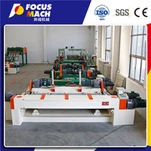
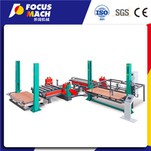
As the demand for plywood continues to grow, modern manufacturing requires advanced technology to handle large volumes, consistently deliver high quality results and optimize the production process. One of the most important equipment in the modern plywood manufacturing industry is the thermal press. This industrial machine is used to apply heat and pressure to wood chips and veneer layers to create strong, durable plywood that can be used in a variety of applications. Here are ten key advantages of using thermal printing in plywood production.
1. High-pressure work
High pressure hot pressing operates at high pressure and ranges from 50 to 120 kg (kg/cm²) per square centimeter, depending on the type of plywood produced. This high pressure helps to tightly compress the wood fibers, resulting in a seamless surface suitable for industrial-scale production.
2. Consistent quality
The heat and pressure applied by hot pressing ensures that each piece of plywood has a consistent quality in terms of strength and durability. The machine can detect and adjust any potential defects or changes in the plywood to ensure that each sheet meets the required quality standards.
3. Customizable
Customizable plywood thermopresses are available in a variety of sizes and types and can be customized to specific design requirements, enabling manufacturers to produce boards in a variety of sizes and thicknesses. By adapting to the needs of different production equipment, the size and type of machine depends on the veneer to be bonded and the amount of throughput required.
4. Increase efficiency
Due to their ability to rush quickly and produce large quantities of top grade plywood quickly, production time and labor can be greatly reduced. This results in increased productivity, shorter turnaround times and higher profits.

5. Low maintenance cost
Durable, almost no maintenance required, low maintenance costs and drop time for hot pressing.
6. Save energy
The efficient energy consumption is achieved by the thermal press, which consumes less energy, resulting in the same amount of plywood as in earlier designs. As a result, they offer a beneficial environmental alternative to traditional plywood creation techniques while reducing carbon branding.
7. Environmental benefits
The use of hot pressing in plywood production reduces waste and environmental impact, thus promoting eco-friendly manufacturing processes.
8. Improve security
Safety features are built into Hot News Mechanical Assurance employees and reduce the possibility of mishaps. Therefore, thermal pressure is preferable to manual plywood manufacturing procedures.
9. Wide use
Multifunctional hot pressing can produce a variety of plywood products such as Marine, attractive, structural, furniture manufacturing, packaging and many other applications.
10. Cost-effectiveness
Although the initial investment can be huge, hot media can prove economical in the long run thanks to its fast processing power, personalized selection, and increased productivity.