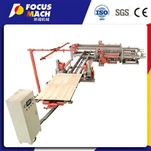
1. Machine Size: 4-Foot vs. 8-Foot Models
The choice of machine size is primarily determined by your target veneer length and log specifications.
- 4-Foot Models: Ideal for small to medium-scale operations, these machines process logs up to approximately 1300mm (~51 inches) in length. They are compact, cost-effective, and perfectly suited for logs with diameters up to 600mm (~24 inches).
- 8-Foot Models: As the powerhouse for large-scale production lines, these models handle logs up to 2600mm (~102 inches) long and can accommodate diameters exceeding 1500mm (~59 inches). Their heavy-duty construction, often weighing over 8,000 kg, ensures stability under significant load.
2. Drive Systems: Mechanical Dependability vs. Hydraulic Smoothness
Two primary drive systems define the operational character of these machines.
- Mechanical Drive Systems: Built on a legacy of reliability, these systems use hardened gears and lead screws for power transmission. They are known for their sturdy construction, straightforward maintenance, and lower initial investment. Thickness adjustment, while precise, typically requires a gear change.
- Hydraulic Drive Systems: Representing a more advanced approach, hydraulic systems provide exceptionally smooth and powerful knife carriage feed. They allow for stepless speed control, reduced operational noise, and form an excellent foundation for consistent veneer thickness, especially under heavy loads.
3. Key Specifications & Motor Configuration
Understanding core parameters is crucial for matching the machine to your raw materials.
- Peeling Diameter & Core: These machines excel at peeling large-diameter logs. The remaining core, a byproduct of the spindle mechanism, can be further processed by a spindleless lathe to maximize material yield.
- Motor Power: Total motor power scales significantly with machine size.
A 4-foot model typically requires a total power of 20kW to 30kW.
An 8-foot model demands a robust 60kW to 75kW to deliver the necessary torque and feed force.
- Constant Peripheral Speed: Modern machines incorporate technology to maintain a constant cutting speed at the knife edge. As the log diameter decreases, the spindle RPM increases, ensuring superior surface quality and consistent veneer thickness throughout the peel.
4. The Advent of CNC Control
The integration of basic CNC systems marks a significant leap in operational ease and precision.
- The most immediate benefit is digital thickness setting. Operators can change veneer thickness instantly via the control panel, eliminating the downtime associated with manual gear changes.
- This enhances production flexibility, reduces operator error, and guarantees remarkable thickness uniformity.
Whether you opt for the steadfast reliability of a mechanical 4-foot machine or the powerful capability of an 8-foot model, the Spindle Veneer Peeling Machine remains a vital investment for a competitive plywood plant. Its evolution with CNC and hydraulic technologies ensures it continues to deliver unmatched value in processing large-diameter timber into premium veneer.