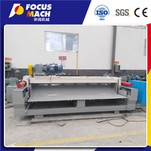
1. Technological Trajectory and Enduring Relevance
The 4-Feet Spindle Peeler represents a specific and enduringly relevant point in the evolution of veneer production technology. The industry has seen a progression from basic spindle-type machines to spindleless models (which use friction rollers for small or irregular logs), and more recently, to hybrid machines that combine both technologies. Despite these advancements, the dedicated 4-Feet Spindle Peeler maintains a vital niche, prized for its unparalleled stability and precision when processing standard-sized logs for high-quality veneer production, particularly in small to medium-scale operations.
2. Core Technical Features and Innovations
The modern 4-Feet Spindle Peeler is a product of continuous innovation, incorporating several key technical features:
- Robust Spindle Drive System: Heavy-duty spindles (typically around 95mm in diameter) provide the high clamping force and torque necessary for stable, high-speed rotation of logs up to 400mm in diameter. Advanced dynamic balancing ensures smooth operation and minimizes vibration, which is critical for achieving uniform veneer thickness.
- Intelligent Control Systems: At the heart of the modern machine is a sophisticated CNC system. This automates the entire peeling process, managing parameters like spindle speed, feed rate, and knife gap. It enables features like constant linear surface speed for optimal cutting conditions and automatic blade angle adjustment for different wood species and thickness settings.
- Enhanced Material Adaptability: Design improvements, such as powered anti-bending rollers, allow the machine to effectively process challenging materials like small-diameter logs and wood with knots or irregularities. This expands the range of viable raw materials and improves overall production economics.
3. Performance Analysis: Strengths and Considerations
Key Strengths:
- Superior Veneer Quality: The rigid spindle clamping mechanism provides exceptional stability during peeling, resulting in veneer with outstanding thickness consistency and surface smoothness.
- High Operational Efficiency: With output speeds reaching up to 90 meters per minute, it offers high throughput for its class.
- Optimal Material Yield: The peeling process is inherently efficient, achieving wood utilization rates of 90% or more, which minimizes waste and raw material cost.
Inherent Considerations:
- Log Size Limitations: There are practical limits to the minimum length and diameter of logs that can be effectively secured by the spindles.
- Capital Investment: As a sophisticated piece of industrial machinery, its initial investment is significant, positioning it as a key asset for established production facilities.
- System Integration: To realize its full potential, the peeler should be part of a well-integrated production line, including conveyors, clippers, and dryers.

4. Future Trends: Shaping the Next Generation
The development of spindle peelers is being shaped by several key industry trends:
- Deepening Digitalization: The integration of IoT sensors and data analytics will enable predictive maintenance, real-time optimization of cutting parameters, and full production traceability.
- Flexibility and Hybridization: The trend towards machines that can switch between spindle and spindleless modes on a single platform will continue, offering manufacturers greater flexibility to handle diverse raw material inputs.
- Sustainability and Efficiency: Driven by environmental and cost pressures, future designs will focus even more on reducing energy consumption through high-efficiency drives and maximizing yield through smarter, vision-assisted optimization systems.
5. Application Scope and Market Prospects
The 4-Feet Spindle Peeler remains a cornerstone machine in several application areas:
- Core Plywood Production: It is extensively used for producing face, back, and core veneers for standard plywood and multi-layer boards.
- Specialized Engineered Wood Products: It plays a role in creating veneers for products like Laminated Veneer Lumber (LVL) used in structural applications.
- Global Market Demand: Steady growth in global construction and furniture manufacturing continues to drive demand for plywood and, consequently, for reliable and efficient peeling machinery. The 4-foot model, in particular, is well-suited to meet the needs of emerging manufacturing hubs and smaller, specialized production plants, ensuring its continued relevance in the global market.
By continuously evolving in precision, intelligence, and adaptability, the 4-Feet Spindle Veneer Peeling Machine is poised to remain a vital and competitive solution in the wood-based panels industry.