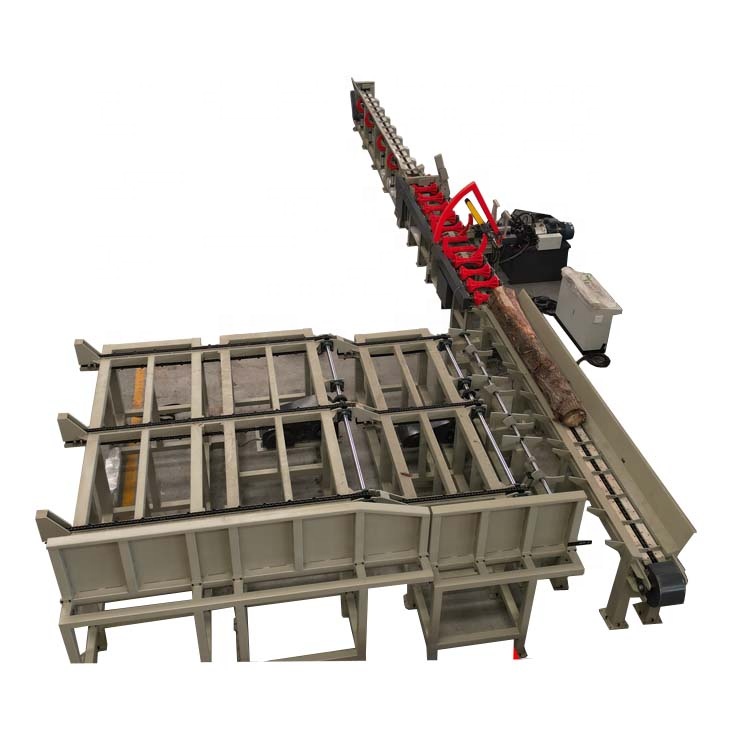
Introducing an automatic log cutting saw is a significant investment. How do you choose the most suitable equipment? And how do you ensure its long-term, stable, and safe operation? This article provides a practical guide for selection and operation.
I. Purchasing Guide: Define Requirements, Select Precisely
When faced with a wide array of products on the market, you need to consider the following aspects comprehensively:
1. Processing Range: This is the primary parameter. Based on the size of logs you typically process, determine the required Maximum Cutting Diameter (e.g., Φ300mm or larger) and Maximum Cutting Length (e.g., 4 meters, 6 meters, or custom).
2. Power and Performance:
· Motor Power: Directly determines the equipment's cutting capability and efficiency. Processing hardwoods or large-diameter logs requires higher power (e.g., 22kW or above).
· Saw Blade Size: Affects the maximum cutting depth and the width of the "kerf" (the saw cut). A narrower kerf means higher material utilization.
3. Control System: Choose a technologically mature and user-friendly CNC brand (e.g., Siemens, Mitsubishi, Syntec from Taiwan, etc.). Ensure it has an Optimization Cutting Function; this function automatically calculates the cutting plan for the highest yield rate, saving significant raw material costs.
4. Efficiency and Precision: Pay attention to the equipment's Positioning Accuracy (usually required within ±1mm) and Cuts Per Minute, as these directly relate to your production capacity.
5. Safety Features: The equipment must be equipped with safety light curtains, anti-kickback devices, emergency stop buttons, and sturdy protective covers. These are essential safeguards for the operator.
Brand and After-Sales Service: Choose a reputable brand and ensure the supplier can provide timely, professional technical support, spare parts supply, and maintenance services to guarantee the equipment's normal operation throughout its entire lifecycle.
II. Safe Operating Procedures: Safety First, Prevention Paramount
Automated equipment also requires strict adherence to safety regulations:
- Certified Operation: Operators must undergo systematic training and be fully familiar with the equipment's capabilities before operating it independently.
- Pre-Operation Inspection: Before starting work each day, check that all components, the lubrication system, and safety protection devices are intact and functional.
- Remove Hazards: Ensure there are no metal foreign objects like nails or wire on the logs to be processed, to prevent damage to the expensive saw blade.
- Strictly Observe Boundaries: While the equipment is running, strictly prohibit any part of the body from entering the cutting area or performing unrelated tasks around the equipment.
- Emergency Response: If abnormal noise, severe vibration, or smoke occurs during operation, immediately press the emergency stop button and notify maintenance personnel.
- Clean Up After Work: After work is completed, disconnect the main power supply and clean wood chips and debris from the equipment and surrounding area to maintain a tidy workspace.
III. Routine Maintenance: Extend Lifespan, Ensure Stable Production
Regular maintenance is the foundation for the long-term stable operation of the equipment:
- Daily: Clean wood chips; check that air pressure/hydraulic pressure is within the normal range.
- Weekly: Check the tension of drive belts and chains; lubricate guide rails, ball screws, and other moving parts.
- Monthly: Tighten electrical terminals; check saw blade wear and tear, and sharpen or replace it promptly.
- Periodically: Hire the manufacturer's professional technicians for comprehensive overhaul and accuracy calibration.
Conclusion
Selecting the right automatic log cutting saw requires a rational analysis of your own needs. Maximizing its value relies on strict safety management and standardized maintenance. The combination of a wise investment and scientific management will undoubtedly bring substantial long-term returns to the enterprise.