High-density fibreboard (HDF) has become a widely used and versatile engineered wood product in various industries due to its unique properties and manufacturing process. The production of HDF involves breaking down hardwood or softwood residuals into wood fibres, which are then combined with wax and a resin binder to form panels through the application of high temperature and pressure. This meticulous process results in a uniform and consistent fibre structure, contributing to the enhanced strength and durability of HDF. One notable advantage of HDF over traditional plywood is its higher density, achieved through the composition of separated fibres. This characteristic makes it suitable for similar applications as a building material while also distinguishing it from particle board. The utilization of separated fibres not only enhances its structural integrity but also provides greater resistance to moisture, making it an ideal choice for use in environments where humidity or dampness may be a concern. The nomenclature "high-density" reflects the distinction in densities within the category of fibreboard, highlighting its superior quality compared to other types of fibreboards available in the market. Large-scale production of HDF began in the 1980s in both North America and Europe, marking an important milestone in the development and widespread adoption of this innovative engineered wood product across various industries such as construction, furniture manufacturing, interior design, and more recently even automotive interiors. In addition to its physical properties, HDF's versatility extends beyond traditional uses as well. It can be easily shaped into intricate designs using CNC routing machines or laser cutting technology, allowing for customized applications in architectural elements like decorative wall panels or intricate furniture components. Furthermore, advancements in surface finishing techniques have expanded HDF's potential for use as a substrate for laminates or veneers that mimic natural wood grain patterns without sacrificing stability. Overall, high-density fibreboard continues to play an integral role across diverse sectors due to its exceptional performance characteristics derived from advanced engineering processes coupled with sustainable sourcing practices that make it an environmentally friendly choice for modern construction projects.
|
Model NO. |
FM-HDFX07 |
|
Certification |
CE, ISO |
|
Condition |
New |
|
Name |
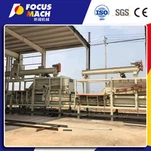
PARTICLEBOARD PRODUCTION LINE |
|
Particle Board Size |
4*8 feet or Customized |
|
Panel Thickness |
10-30mm |
|
Particle Board Plant |
100-300m3 / Per Day |
Product Pictures


Packaging & Shipping

Company Information


Why Choose Us
(1) Over 30 years manufacturing experience in wood-based panel making machinery.
(2) 20 years exporting experience to over 30 countries all over the world.
(3) Customized machines according to every customer's actual production demand with best production solutions.
(4) Free design the whole factory production plant with economy investment budget.
(5) Whole process control from placing order - production - containers loading - customs documents courier - containers unloading - machines installation & debugging.
(6) 2 Years quality guaranteen period & life-time free online after-sales service.
(7) Professional after-sales team over 10 years oveseas installation and debugging experience.
(8) Free training and guidance for workers on machines' operation and wood-based panel production technology.
Hot Tags: cotton straw HDF machinery, China cotton straw HDF machinery manufacturers, suppliers, factory, 50000CMB HDF Line, HDF Machinery Line, HDF Production Line Machinery, Pine HDF Machinery, HDF Manufacturing Line, Plywood Waste MDF Machinery