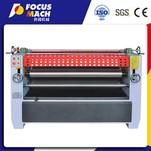
In modern wood processing lines, log debarking is the crucial first step. The Rotary Debarker (also known as a Drum Debarker), known for its high efficiency, strong adaptability, and cost-effectiveness, has become the preferred equipment for numerous sawmills, wood-based panel plants, and pulpwood chip production lines.
I. What is a Rotary Debarker?
A Rotary Debarker is a piece of equipment that removes bark from logs through mechanical means. Its core principle relies on the mutual friction and impact between the logs themselves, and between the logs and the machine's inner wall, to strip the bark. It is primarily suitable for short logs (typically 2-6 meters) of various diameters, lengths, and shapes, and is particularly suited for processing large volumes of medium-quality wood.
II. Main Structure and Components
A typical Rotary Debarker mainly consists of the following parts:
- Drum Body: A large steel drum, serving as the core working chamber. The drum wall is equipped with screen holes to allow the discharge of stripped bark and debris.
- Support Device: Includes support rollers and thrust rollers, used to support the large drum and limit its axial movement, ensuring smooth rotation.
- Transmission System: Composed of the motor, reducer, gears, etc., providing rotational power to the drum.
- Feeding and Discharging Devices: Located at each end of the drum, responsible for continuously and uniformly feeding logs into and out of the drum.
- Base Frame: A steel structure base that carries the weight of the entire equipment.
- Bark Discharge System: Usually located below the drum, it uses conveyors or screw conveyors to centrally remove the stripped bark.
III. Working Principle
The working process of a Rotary Debarker can be summarized in four steps: "Load, Rotate, Impact, Discharge".
- Loading: Logs are fed continuously or in batches into the slowly rotating drum via the feed conveyor.
- Rotation and Tumbling: Driven by the transmission system, the drum rotates at a certain speed (typically 5-15 RPM). The logs inside are lifted as the drum turns and then tumble down due to gravity.
- Friction and Impact Debarking: During the continuous tumbling and falling, intense friction and impact occur between the logs themselves and between the logs and the drum's inner wall. This combined mechanical force is sufficient to strip the bark, which has relatively weak adhesion, from the wood.
- Discharge and Separation: The stripped bark and debris fall through the screen holes in the drum wall onto the collection system below and are transported away. The debarked logs are gradually conveyed to the discharge end, either by the drum's slight incline or via the discharge mechanism, proceeding to the next processing stage.
IV. Core Advantages and Application Value
- High Efficiency: Capable of 24-hour continuous operation with massive single-machine processing capacity, making it ideal for large-scale production.
- Strong Adaptability: Not highly demanding regarding wood species, diameter, or curvature; it can even process wood with some branches.
- Low Maintenance Cost: Relatively simple structure, primarily relying on the self-friction of wood, with few wear parts and low operating costs.
- Improves Subsequent Processes: Clean log surfaces facilitate scaling, sorting, and improve the quality of sawing or chipping. Simultaneously, it removes sand and stone impurities from the bark, effectively protecting downstream equipment.
Conclusion:
As the "pioneer" in the wood processing flow, the stable and efficient operation of the Rotary Debarker is directly related to the smoothness and profitability of the entire production line. Understanding its structure and principles is the foundation for correct operation, maintenance, and maximizing its effectiveness.